Why do people use at-home beauty machines in 2026? The answer is more practical than futuristic. Consumers want visible skincare support without adding clinic visits to busy schedules. A warm LED mask, a cooling eye device, or a microcurrent tool can fit beside a bathroom mirror. Convenience matters.
Industry data supports this shift. Grand View Research describes the home-use beauty devices market as a fast-growing category, driven by improved technology, disposable income, and rising skincare awareness. Its market analysis also identifies facial devices as a major product segment. McKinsey’s Beauty market report expects global beauty sales to continue expanding through 2027, with online channels becoming increasingly important. NIQ’s beauty insights similarly show that shoppers are comparing ingredients, claims, reviews, and performance before purchasing.
Trust remains complicated. It is not enough for a device to look elegant or collect thousands of likes. Professional guidance from the American Academy of Dermatology reminds users that results depend on the device, skin condition, correct technique, and consistent use. Some products may irritate sensitive skin or worsen existing problems when used carelessly. That detail is easy to forget.
People also seek control. They can track routines, adjust treatment time, and stop when discomfort appears. Still, home technology is not a substitute for diagnosis or individualized medical care. The evidence is developing, and some marketing language runs ahead of independent research. That gap deserves attention. In 2026, the strongest reason to explore these machines may be balanced convenience: useful tools, realistic expectations, and safer decisions.
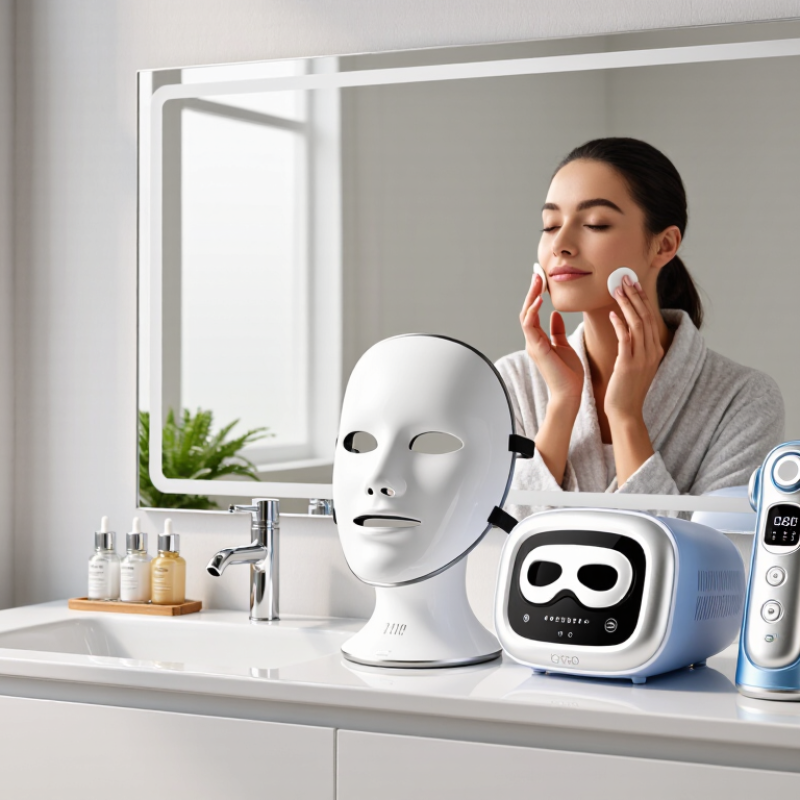
At-home beauty machines are handheld or countertop devices designed for personal skincare routines. They use light, gentle electrical currents, vibration, heat, or sonic movement. Unlike professional equipment, these machines usually operate at lower intensities. Their purpose is convenience, not instant transformation. A mirror, clean skin, and ten quiet minutes may be enough for many routines.
Common types include LED light devices, microcurrent tools, cleansing brushes, and light-based hair-reduction systems. LED devices may use red or near-infrared light to support the appearance of calmer skin. Microcurrent tools deliver mild electrical stimulation and may temporarily improve facial firmness. Cleansing brushes help remove surface oil, but aggressive use can cause irritation. Hair-reduction devices use controlled light and require careful adherence to skin-tone and hair-color guidance. Each function has different evidence behind it.
I have found that consistent, gentle use matters more than dramatic settings. My routine is not perfectly consistent. That matters. Skin can become dry, red, or sensitive when people overuse devices or combine them with strong exfoliants. Reading the manual is practical, but it is not enough for every skin condition. Users should avoid damaged skin, protect their eyes when required, and stop after persistent discomfort. People with photosensitivity, implanted electronic devices, or ongoing dermatological treatment should seek qualified medical advice before use. Results also vary, and some claims deserve more skepticism than excitement.
A practical comparison of common home-use beauty devices, their technologies, purposes, usage patterns, and important limitations.
| Device Type | Core Technology | Main Beauty Function | Common Target Areas | Typical Home-Use Pattern | When Results May Become Noticeable | Important Limitations and Safety Considerations |
|---|---|---|---|---|---|---|
| LED Light Therapy Devices | Non-UV red, near-infrared, or blue light-emitting diodes | Red and near-infrared light are commonly used to support the appearance of fine lines and skin texture; blue light is commonly used for blemish-prone skin. | Face, neck, chest, and selected areas of the body | Usually several short sessions per week, following the device instructions | Skin appearance may gradually improve over several weeks; maintenance is often needed | Results vary by wavelength, dose, skin condition, and consistency. Eye protection may be required. Blue light can irritate sensitive skin, and light-sensitive users should seek professional advice. |
| IPL Hair-Reduction Devices | Intense pulsed light absorbed by pigment in the hair shaft and follicle | Long-term reduction of visible hair growth after repeated treatments | Legs, underarms, bikini line, and other manufacturer-approved areas | Often used weekly or every two weeks at first, followed by occasional maintenance | Hair reduction commonly develops over multiple treatment cycles rather than after one session | Works best when there is sufficient contrast between hair and skin. It is generally ineffective on white, gray, red, or very light-blond hair. Avoid use on tanned or sunburned skin and follow skin-tone restrictions carefully. |
| At-Home Laser Hair-Reduction Devices | Low-power laser energy directed toward hair pigment | Gradual reduction in the appearance and growth of unwanted hair | Usually smaller body areas, depending on the device design | Repeated treatments at scheduled intervals, followed by maintenance sessions | Visible changes usually require several weeks or treatment cycles | Home devices are lower powered than professional systems and are not suitable for every skin or hair type. Avoid use near the eyes, on tattoos, or over suspicious skin lesions unless specifically approved. |
| Microcurrent Devices | Very low-level electrical current delivered through conductive contact points | Temporary improvement in the appearance of facial tone, contour, or puffiness | Face, jawline, and neck when permitted by the instructions | Often used several times per week with a compatible conductive gel or serum | Some users notice a temporary effect after a session; longer-term appearance changes require consistent use | Do not use over broken skin. People with implanted electronic devices, certain neurological conditions, or other medical concerns should consult a healthcare professional before use. |
| Radio-Frequency Skin-Tightening Devices | Radio-frequency energy that gently heats tissue beneath the skin surface | Supports the appearance of firmer skin and may soften the look of fine lines over time | Face, jawline, neck, and sometimes body areas approved by the manufacturer | Usually scheduled weekly or according to the device protocol, with maintenance use afterward | Gradual changes may appear after several weeks or months; results are generally subtle compared with professional treatment | Overheating can cause burns or pigment changes. Avoid use over metal implants, active skin disease, or areas with reduced sensation unless cleared by a professional. |
| Ultrasound Skin-Care Devices | High-frequency mechanical sound waves, sometimes combined with cleansing or product-delivery functions | Surface cleansing, gentle exfoliation, or temporary enhancement of product application depending on the device | Primarily the face, especially the forehead, nose, and chin | Generally used occasionally rather than multiple times daily | Improved surface feel may be noticed quickly; broader cosmetic benefits vary and may be temporary | Excessive pressure or frequency can cause irritation. Avoid use over open wounds, active infections, or areas where ultrasound is medically contraindicated. |
| Home Microdermabrasion Devices | Controlled abrasion or suction to remove some surface dead skin cells | Temporary improvement in skin smoothness, dullness, and the appearance of superficial uneven texture | Face and selected body areas, excluding delicate skin around the eyes | Usually used every one to two weeks, depending on skin tolerance | Smoother-feeling skin may be noticeable after one use; repeated use may improve surface texture gradually | Overuse may cause redness, irritation, or increased sensitivity. Avoid active acne lesions, eczema flares, rosacea flares, sunburn, and broken skin. Daily sunscreen is especially important after exfoliation. |
| Facial Cleansing Brushes | Rotating, oscillating, or sonic mechanical cleansing action | Removes surface oil, makeup residue, and impurities as part of a cleansing routine | Face, avoiding the immediate eye area | Often used a few times per week or as tolerated, rather than with aggressive daily scrubbing | Clean-feeling and smoother-feeling skin may occur immediately; it does not permanently change skin structure | Firm pressure and excessive use can damage the skin barrier. Use a clean device head and reduce frequency if dryness, stinging, or persistent redness develops. |
| Facial Steamers | Warm water vapor applied to the skin surface | Provides temporary warmth and hydration-related softness before cleansing or masking | Face only, at a comfortable distance | Used occasionally for short periods | Softness and warmth are usually immediate but temporary | Steam does not permanently open pores. Excessive heat may worsen redness, rosacea, or irritation and can cause burns. Keep the device away from children and avoid direct contact with hot water. |
| Facial Massage and Cooling Tools | Manual pressure, vibration, cooling, or thermal contact | Temporary reduction in the appearance of puffiness and a refreshed skin feel | Face, jawline, and neck, depending on the tool | Used for a few minutes as desired, with light pressure and clean skin | The cooling or massage effect is generally immediate but temporary | These tools do not permanently reshape facial tissue or remove fat. Avoid aggressive pressure over inflamed acne, bruises, wounds, or areas with reduced sensation. |
They are handheld or countertop devices for personal skincare routines. They may use light, warmth, vibration, mild currents, or sonic movement. A mirror and ten quiet minutes may be enough.
Common types include LED light devices, microcurrent tools, cleansing brushes, and light-based hair-reduction systems. Each type has different functions and evidence.
Red or near-infrared light may support a calmer-looking complexion. Results are usually gradual and subtle. Dramatic promises deserve careful skepticism.
They deliver mild electrical stimulation to facial muscles and skin. Some users may notice temporary improvements in facial firmness. The effect is not permanent.
They can remove surface oil and debris. Pressing too hard or using them too often may cause redness, dryness, or irritation. Gentle use matters.
Follow the device’s skin-tone and hair-color guidance carefully. Use the recommended settings and schedule. Results can vary between body areas and individuals.
They can reduce travel, appointment planning, and repeated professional treatment costs. Someone can use one beside a bathroom mirror after work. Convenience helps, but it can also create false confidence.
Avoid using devices on damaged or irritated skin. Protect your eyes when instructions require it. Stop after persistent discomfort, unusual redness, or worsening sensitivity.
People with photosensitivity, implanted electronic devices, or ongoing dermatological treatment should ask a qualified medical professional first. Product instructions may not cover every skin condition.
Not necessarily. A costly device left unused in a drawer offers poor value. Check safety guidance, evidence, return policies, and realistic timelines before buying. My own routine is not perfectly consistent. That matters.
Why do people use at-home beauty machines? These devices offer convenient, private, and potentially cost-effective ways to support everyday skincare routines. Common types include light-based tools, microcurrent devices, cleansing systems, facial steamers, and hair-removal equipment, each designed for functions such as improving skin appearance, reducing temporary puffiness, or supporting smoother texture. With the market projected to grow at a 15.4% CAGR, wider consumer interest is being driven by technological development, easy access, and the desire for personalized beauty care at home.
Home devices may help address concerns such as mild acne, uneven tone, fine lines, or unwanted hair, but results vary and are usually less intensive than professional treatments. Their lower long-term cost, time-saving convenience, and avoidance of repeated clinic visits can influence purchasing decisions, especially as professional services become more expensive. Consumers should follow FDA guidance where applicable, select properly tested devices, read instructions carefully, protect sensitive skin and eyes, and avoid excessive use. Understanding possible irritation, burns, or interactions with medications is essential for safer use.

 Earts Beauty