Choosing home beauty tools can feel like standing before a crowded shelf: cleansing brushes, facial rollers, LED devices, and microcurrent tools all promise different benefits. But the right choice depends less on trends and more on your skin, routine, budget, and comfort. A sensitive face may not welcome vigorous scrubbing. A device that sits unused in a bathroom drawer offers little value, however impressive its features look.
What are the best home beauty tools for skin? There is no single answer for everyone. Some tools may support cleansing or help skincare products feel easier to apply, while others offer light-based or electrical treatments that require careful use. Evidence varies by device, and home tools are not substitutes for professional care or medical advice. Check the manufacturer’s instructions, use devices only as directed, and be cautious if you have a skin condition, use prescription treatments, or experience irritation.
Small details matter. Consider how often a tool needs cleaning, whether replacement parts are available, and how much time each session takes. A device requiring ten minutes may sound manageable until a busy week begins. I have learned that convenience can matter as much as performance, though it is easy to underestimate this when shopping. This guide explores common tool types, practical safety checks, and ways to compare claims with realistic expectations. The aim is not a perfect routine. It is a considered one that suits your skin and that you can maintain.
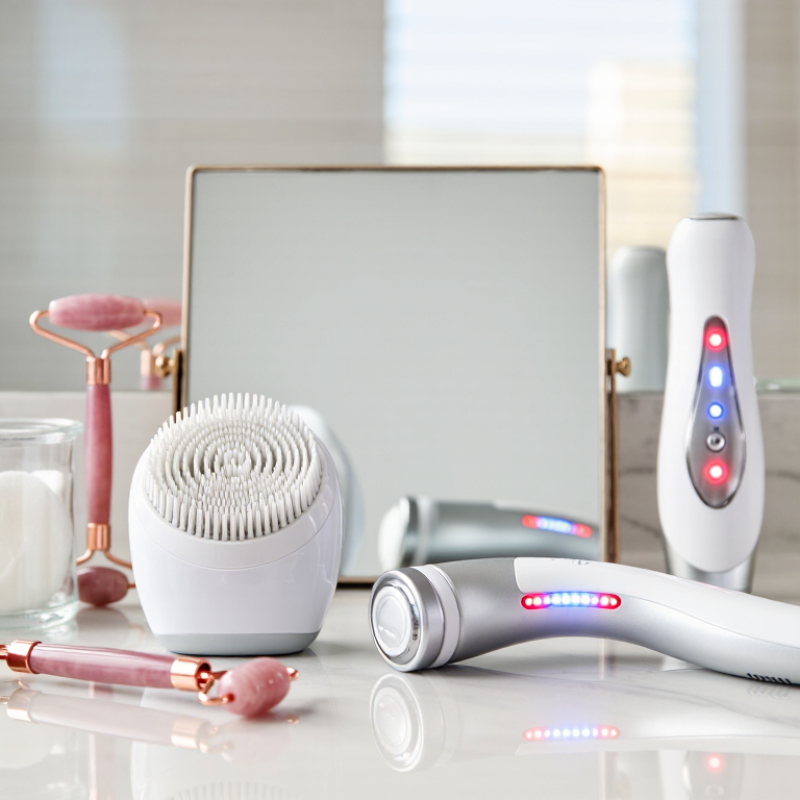
Before choosing a home beauty tool, name the change you want to support. Is your main concern temporary puffiness, rough texture, or a routine that feels more soothing? Different goals call for different tools. A soft cleansing brush may help loosen surface residue, while a cool facial roller can feel calming on a puffy morning. For gentle exfoliation, consider a mild tool designed for home use rather than chasing an intense treatment. Keep expectations modest. A device cannot erase deep lines or diagnose a skin condition.
Match the tool to your skin’s current needs, not just its appearance in a bathroom photo. Sensitive or easily irritated skin may do better with a smooth, nonabrasive tool and brief contact. If you are considering light-based or microcurrent devices, read the instructions carefully and check whether the guidance fits your health circumstances. When in doubt, ask a qualified skin-care professional. Clean tools after each use, avoid sharing them, and stop if you notice burning, persistent redness, or discomfort. That part is easy to overlook. I have found that people often use a new device too often at first, hoping for faster results. Start slowly, watch how your skin responds, and adjust; progress can be uneven.
| Skin Goal | Home Beauty Tool Type | What It May Help With | How to Choose and Use It | Key Precautions |
|---|---|---|---|---|
| Remove surface dirt and makeup | Soft manual cleansing brush | Provides gentle physical cleansing when used with a mild cleanser. | Choose soft, smooth bristles or a washable silicone surface. Use light pressure and follow the tool’s cleaning instructions. | Over-scrubbing can irritate skin. Avoid use on broken, inflamed, or highly sensitive skin. |
| Support gentle exfoliation | Low-strength home exfoliation device | May help loosen surface buildup, depending on the device and its method of exfoliation. | Look for clear instructions and adjustable settings. Start at the lowest setting and use infrequently. | Do not combine aggressive device use with strong exfoliating products unless advised by a qualified professional. |
| Improve the appearance of fine lines or uneven tone | At-home LED light device | Some devices have evidence for specific skin concerns, but results vary by device, treatment schedule, and user. | Choose a device with wavelength and eye-safety information, and follow its stated treatment time and frequency. | Use eye protection when instructed. Seek medical advice if you have a light-sensitive condition or take photosensitizing medication. |
| Temporarily reduce facial puffiness | Cooling facial roller or cold-compress tool | Cooling may temporarily soothe skin and reduce the appearance of puffiness. | Choose a smooth, easy-to-clean tool. Use gentle strokes and keep the tool cool, not painfully cold. | Do not apply frozen tools directly to skin. Stop if you experience pain, numbness, or persistent redness. |
| Apply products evenly | Clean manual applicator or facial massage tool | Can help spread skincare products or provide a gentle massage; it does not guarantee deeper product absorption. | Choose a nonporous surface that is easy to wash. Use light pressure on clean skin. | Clean after use and avoid dragging the tool over active breakouts or irritated areas. |
| Address unwanted facial hair | Personal facial hair-removal device | Some devices remove or reduce hair; suitability depends on the device, hair color, skin tone, and treatment area. | Check the device’s skin-tone and hair-color guidance, test a small area as instructed, and follow the treatment schedule. | Do not use over tattoos, irritated skin, or areas excluded by the instructions. Protect treated skin from excess sun exposure. |
| Improve the appearance of skin texture | At-home microcurrent or similar electrical facial device | May provide temporary cosmetic effects for some users; evidence and results vary by device and intended use. | Review the device instructions, required conductive products, and recommended session length before purchasing. | Consult a healthcare professional before use if you have an implanted electronic device or a relevant medical condition. |
| Maintain a simple, low-irritation routine | No device or a basic cleansing tool | A gentle routine with cleanser, moisturizer, and sun protection may be sufficient for many skin goals. | Choose tools only when they address a specific need; prioritize comfort, clear instructions, and easy cleaning. | Stop using any tool that causes persistent burning, swelling, pain, or irritation. Seek professional advice for ongoing skin concerns. |
Notice everyday patterns, such as tightness after washing, midday shine, or easy flushing. These clues can guide your choice, but they are not a diagnosis.
Not necessarily. Oily skin does not automatically need stronger treatment. Start gently and see how your skin responds.
Avoid using it on cuts, sunburn, active rashes, or irritated acne. Heat, suction, exfoliation, or light may aggravate some sensitive skin conditions.
If the instructions allow, try the lowest setting on a small area. Watch for lasting redness, swelling, or discomfort, and stop if a reaction occurs.
Note the device, setting, and how your skin looks the next day. Memory can be unreliable.
Include ongoing costs, such as replacement heads or charging cables. A low-cost option may be enough if it fits your needs and is easy to maintain.
Consider how much time you can realistically spend. A brief evening step may suit a busy schedule better than a device requiring frequent, lengthy use.
Look for clear cleaning instructions, recommended use frequency, and safety precautions. Dramatic before-and-after claims are not enough.
Ask a qualified clinician if you have a skin condition, use prescription treatments, or feel unsure about a device’s precautions. A quick online search may miss something.
Choosing the right home beauty tool starts with clarifying your skin goals, whether you want to support cleansing, hydration, or the appearance of smoother skin. Consider your skin type, sensitivity, and any conditions that may make certain tools unsuitable. What are the best home beauty tools for skin depends on these personal needs, as well as the technology, features, and intended use of each option.
Before making a choice, check how safely and easily a tool can be used, what care it requires, and whether its instructions fit your routine. A practical option should feel comfortable to use and be simple to clean and maintain. Compare costs with your budget, and choose a tool you can use consistently alongside your existing skincare habits rather than one that promises more than you need.

 Earts Beauty