Can I use beauty devices every day? The honest answer depends on the device, its energy level, and your skin. A cleansing brush, LED mask, microcurrent tool, and at-home peel do not share one safe schedule. Daily use may suit one product, while another can leave skin red, tight, or sore. Small details matter: the manual’s timer, clean contact surfaces, and whether irritation lasts beyond a few minutes.
The U.S. Food and Drug Administration’s guidance on home-use devices makes an important distinction: a device is evaluated for specific intended uses, not every routine a user might invent. The American Academy of Dermatology likewise advises following product directions and seeking professional advice when a device causes a reaction. These sources do not set one daily-use rule for all beauty devices. That gap matters. Sales and market-growth reports can measure consumer interest, but they cannot prove that daily treatment is safe or effective.
Board-certified dermatologist Dr. Hadley King’s practical guidance is to match treatment frequency to the device’s instructions and your skin’s response. More is not automatically better. If a device feels painful, causes persistent redness, or worsens sensitivity, pause rather than pushing through. A missed session is usually less concerning than repeated irritation. This guide explores seven practical tips, including how to read manufacturer schedules, introduce a device gradually, and recognize when daily use may be too much. Individual skin varies, and these tips cannot replace medical advice—especially for people with active skin conditions or recent procedures.
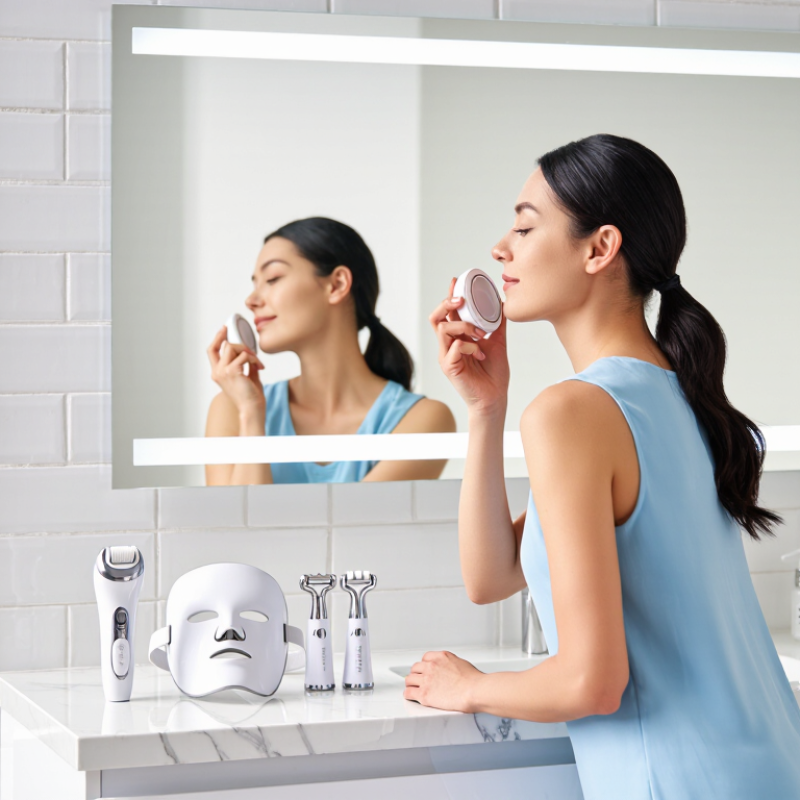
Can I Use Beauty Devices Every Day? 7 Tips
Check the device type and its FDA label: there is no universal daily-use schedule. A facial cleansing brush, LED mask, microcurrent tool, and home-use light-based hair device affect skin differently. Even similar devices may have different power settings and treatment times. The FDA’s labeling and safety information should guide use; clearance does not mean a device is suitable for every person or safe to use more often. The American Academy of Dermatology estimates that acne affects up to 50 million Americans each year, but that figure is not a reason to increase light-device sessions. The condition being treated matters. So does your skin.
Tips: Read the full instructions before the first session. Check the recommended frequency, duration, and warnings. Start only as directed, and don’t add extra sessions to speed results. Keep a simple log: date, setting, minutes, and any redness or stinging. Pause if irritation develops, and seek medical advice for persistent symptoms. FDA adverse-event reports can flag possible device problems, but the agency notes that reports alone cannot show how often harm occurs or prove a device caused it.
Clean contact surfaces as instructed, and avoid using a device on broken or irritated skin unless its labeling specifically permits it. Ask a dermatologist before use if you have a skin condition, take light-sensitive medication, or are unsure which device category you own. A small print warning can change the schedule.
No. Follow the schedule in your device’s manual; different devices may require different intervals.
Hair grows in cycles, and one flash affects only some follicles. More flashes do not guarantee faster results.
Resume according to the manual. Do not treat twice to make up for a missed session.
Not automatically. Frequency depends on the device, light settings, session length, and reason for use.
Follow the instructions for a small test area, such as your inner arm or jaw. Wait as directed before treating more skin.
Stop for burning, persistent redness, itching, swelling, or irritation. Blistering or unusual pain deserves medical advice.
Note dates, session length, settings, and skin changes. It may feel fussy, but it can help reveal patterns.
No. A small test helps, but it cannot predict every reaction. That matters.
Can I use beauty devices every day? There is no schedule that suits every device or skin type. Check the device’s instructions and any applicable safety labeling before use, including the recommended frequency, session length, and areas to avoid. For IPL devices, treatment timing can differ considerably, so follow the specific instructions rather than assuming daily sessions are appropriate. LED routines also vary: recommended frequency depends on the device and the skin concern being addressed, and clinical protocols are not all the same.
If you are new to a device, start conservatively and patch-test on a small area when appropriate. Stop using it if you experience burning, persistent redness, or irritation, and seek professional advice if symptoms continue. Protect treated skin from sun exposure: use broad-spectrum SPF 30 or higher, and reapply every two hours when outdoors. A careful routine guided by the device instructions is safer than using a device more often than recommended.

 Earts Beauty