At-home beauty devices promise smoother skin, brighter tone, and salon-like results without leaving the bathroom. Yet a red light panel, a microcurrent wand, and a dermaplaning tool do not carry the same risks. Irritation, burns, swelling, or unwanted pigment changes can occur, especially with incorrect settings, poor technique, or sensitive skin. The details matter.
What are the side effects of home beauty tools? This guide compares five popular options and explains what users may notice after treatment. Board-certified dermatologist Dr. Mona Gohara’s practical guidance can be summarized this way: choose a device suited to your skin, follow its instructions, and stop if discomfort develops. This is a paraphrase, not a verbatim quotation. A sting is not proof that a tool is working.
Some effects are temporary. Others deserve prompt medical advice. A warm cheek may settle quickly; blistering or persistent pain should not be brushed aside. Keep the device clean. Avoid using it over broken or inflamed skin unless a clinician advises otherwise. Small steps help.
The guide also considers who should seek professional advice before trying home treatments, including people with skin conditions or photosensitivity. Device claims can sound reassuring, but results vary, and home tools are not risk-free. Even careful users can misjudge pressure or exposure time. That deserves a pause. Better information helps readers choose cautiously, recognize warning signs, and decide when a dermatologist’s guidance is the safer option.
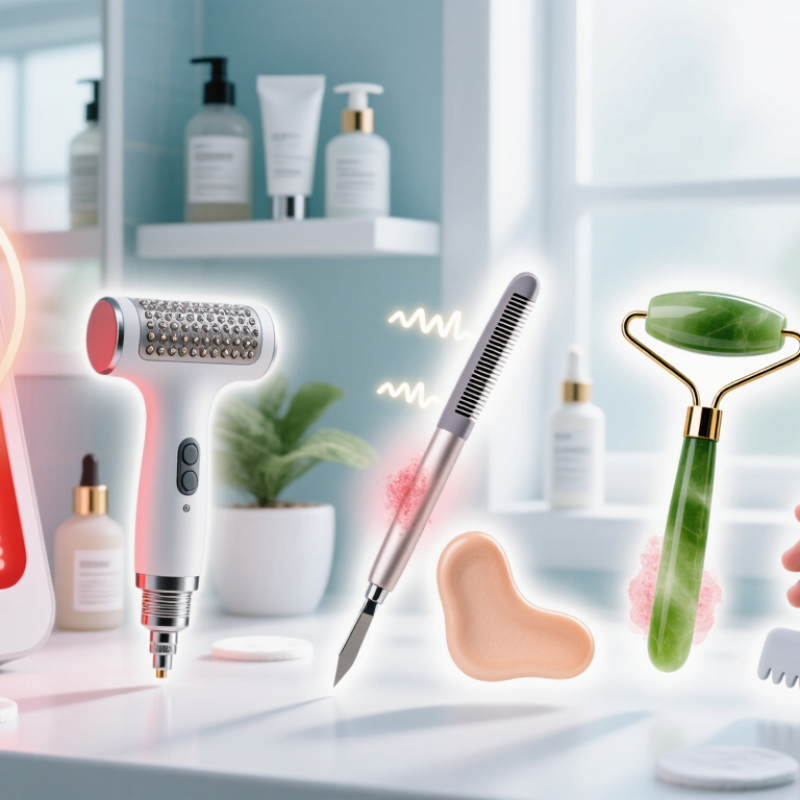
At-home beauty tools are handheld or countertop devices designed to support skincare routines without an in-office appointment. They use different methods: cleansing brushes move bristles across the skin, while facial rollers provide gentle pressure and may temporarily ease puffiness. LED devices emit specific colors of light; their effects depend on the device, treatment schedule, and individual skin. Small devices, real effects.
Other tools use mild electrical currents or heat. Microcurrent devices deliver low-level currents through skin-contact electrodes, while home light-based hair-removal devices target pigment in hair follicles. These technologies are not interchangeable, and results can be modest. The science is uneven, and marketing can sound more certain than the evidence.
How you use a tool matters. Clean the device as directed, avoid broken or irritated skin, and follow its timing and eye-protection instructions. More pressure or longer sessions do not necessarily work better. Stop if you feel burning, persistent redness, pain, or unusual swelling. People with sensitive skin, certain medical conditions, or medications that increase light sensitivity may need professional advice before use. A patch test can help, though it cannot prevent every reaction. That part is easy to overlook.
Choosing a beauty tool starts with a skin goal, not a trend. For acne, consider an at-home LED device with evidence for your specific use; wavelengths and instructions vary. For puffiness, a cool facial roller may offer temporary comfort, not lasting lifting. Microcurrent devices target facial muscle stimulation, while sonic brushes cleanse but may irritate sensitive or rosacea-prone skin. At-home exfoliating tools can smooth roughness, yet excess pressure may cause redness or tiny cuts. Less can be more.
Match the tool to your skin’s tolerance. Grand View Research estimated the global beauty devices market at $39.1 billion in 2023, with projected growth through 2030. That market figure measures sales, not proof that every device works. Check whether the device has appropriate regulatory clearance, read its intended-use instructions, and avoid use on broken or inflamed skin. Keep LED light away from unprotected eyes when instructions require it. Patch-test where practical. Stop if burning, swelling, or persistent redness develops.
Think about upkeep, too: a brush head that stays damp can collect residue, and a device you rarely use may not justify its cost. Honestly, choosing is less tidy than online routines suggest. If you have eczema, rosacea, active acne, or use prescription treatments, ask a dermatologist before trying exfoliation or energy-based devices. That matters.
Home beauty tools can complement a simple routine, but they are not all suitable for every skin type. A cleansing brush lifts surface residue; too much pressure may cause redness or dryness. LED light devices are used to support acne care or improve the look of fine lines, though results vary. Microcurrent tools deliver mild electrical stimulation to temporarily tone facial muscles. Some people notice tingling or irritation.
A facial roller can gently massage skin and reduce the feeling of puffiness for a short time. It should glide over clean skin, not pull at it. At-home microneedling rollers are intended to create tiny punctures, but they can cause infection, scarring, or dark marks when used incorrectly. That risk deserves serious thought. A smoother look is not worth damaged skin.
Tips: Read the device instructions and test a small area first. Keep tools clean, use gentle pressure, and stop if burning or persistent redness appears. Avoid using a tool on broken or inflamed skin. If you have a skin condition, take medication that increases light sensitivity, or feel unsure, ask a qualified healthcare professional before trying it. I still find it easy to assume more use means better results; often, it just means more irritation.
At-home beauty tools can irritate skin, even when used as directed. Exfoliating brushes and home peels may cause dryness, stinging, or a damaged skin barrier if used too often. Suction devices can leave bruises or broken capillaries. Redness may fade quickly, but lingering pain or swelling deserves attention. That can happen.
Light-based devices, including home IPL and LED tools, carry different risks. IPL can cause burns, changes in skin color, or eye injury when settings or protective steps are unsuitable. LED light may also bother sensitive eyes. Read the safety instructions carefully, and do not use a device on irritated or broken skin. A small patch test can help reveal a reaction, though it cannot guarantee safety everywhere. Keep tools clean, and avoid sharing them.
Some treatments may not suit people with certain skin conditions, medications, or recent procedures. A dermatologist can help assess those risks, especially if you have a history of unusual scarring or pigmentation changes. Stop using a tool if burning, blistering, or persistent redness occurs, and seek medical advice. Skin does not follow a neat schedule; using a device more often is not automatically better. I can see how easy it is to mistake stronger sensations for better results.
Home beauty tools can irritate skin when used too often, on broken skin, or without cleaning. Before using a cleansing brush, LED mask, or hair-removal device, read its instructions and check whether it suits your skin tone and condition. Wash your hands, clean the device as directed, and avoid sharing it. Use gentle pressure. Stop if you feel burning, sharp pain, or persistent heat.
Evidence has limits. The FDA’s MAUDE database collects reports of problems involving medical devices, but voluntary reports and missing usage totals mean they cannot show how often a device causes harm. That uncertainty matters: a lack of reported incidents is not proof of zero risk. The American Academy of Dermatology advises caution with at-home microneedling, which can cause infection, scarring, or changes in skin color. Skip it if you have active acne, a skin infection, or a tendency to form raised scars. Small red dots are not always harmless.
Seek a dermatologist’s advice before using a device near your eyes, over a changing mole, or on eczema-prone skin. Stop treatment and get medical help for blistering, swelling, severe pain, or vision changes. Take a clear photo and note the device settings and date; those details can help a clinician assess the reaction. And yes, even careful users can misjudge irritation. Don’t push through it.
Start with one clear goal, such as cleansing or temporary puffiness relief. Match the tool to your skin’s tolerance, not a trend.
Some devices are used for these concerns, but results vary. Check the intended use and follow the instructions carefully. Keep light away from unprotected eyes when directed.
A cool roller may ease the feeling of puffiness for a short time. It does not provide lasting lifting. Use it gently on clean skin.
Yes. Too much pressure may cause redness or dryness, especially on sensitive or rosacea-prone skin. Gentle cleansing may be enough.
Keep it clean and dry according to its instructions. A damp brush head can collect residue. I sometimes forget this part.
Stop if you notice burning, swelling, or redness that persists. Avoid using tools on broken or inflamed skin.
No. Excess pressure can cause redness or tiny cuts. Microneedling rollers may cause infection, scarring, or dark marks when used incorrectly.
Ask a dermatologist if you have eczema, rosacea, active acne, or use prescription treatments. Also ask if a device feels unclear or unsuitable. My judgment can be imperfect.
At-home beauty tools use light, gentle electrical currents, vibration, or manual massage to support skincare goals such as cleansing, temporary depuffing, or improving the appearance of skin tone. The right choice depends on your skin type, sensitivity, goals, and comfort with regular use. Popular options include LED devices, microcurrent tools, facial cleansing brushes, facial rollers, and microneedling-style tools; each works differently and may not suit everyone.
What are the side effects of home beauty tools? Possible reactions include redness, dryness, irritation, breakouts, or discomfort, especially when a tool is used too often, with too much pressure, or on sensitive or damaged skin. Read the instructions, keep devices clean, start gently, and stop if irritation occurs. Avoid using a tool on broken skin unless a qualified professional advises otherwise. Seek professional guidance if you have a skin condition, are unsure which device is appropriate, or experience persistent or severe symptoms.
